What Is the Best Water Softener? Key Factors to Consider
If you live in a hard water area, a water softener is not a luxury—it's a necessity. It protects your plumbing, saves you money on energy and soap, and improves your quality of life. But when you start shopping, you're faced with a crucial question: what is the best water softener? The answer is not a single brand or model, but the unit that is correctly sized and designed to handle your home's specific water hardness level and water usage.
Factor 1: Sizing is Everything (The Capacity Calculation)
The most common mistake homeowners make is choosing a unit that is too small. The "best" unit is one that is properly sized. Water softeners are rated by the number of grains of hardness they can remove between regenerations.
The Formula:
- Determine Water Hardness: Get a professional water test to find your water's hardness in Grains Per Gallon (GPG).
- Estimate Daily Usage: Multiply the number of people in your home by 90 gallons (the average daily water use per person).
- Calculate Daily Grain Removal: Multiply your daily usage by your water hardness (GPG).
- Determine Required Capacity: Multiply the daily grain removal by the number of days you want between regenerations (typically 7-10 days).
A properly sized unit will regenerate less frequently, saving you salt, water, and money.
Factor 2: Regeneration Type (Efficiency)

The regeneration cycle is when the softener cleans itself, and the type of control valve dictates how efficiently this happens.
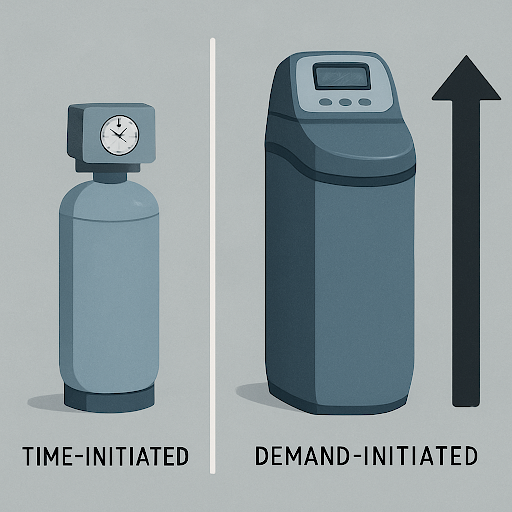
1. Time-Initiated (Timer) Softeners
These units regenerate on a set schedule (e.g., every three days), regardless of how much water you have used.
- Pros: Simple, lower upfront cost.
- Cons: Inefficient if you are away, it wastes salt and water. If you have guests, it might run out of soft water early.
2. Demand-Initiated (Metered) Softeners
These units use a meter to track water usage and only regenerate when the resin is close to capacity.
- Pros: Highly efficient, saving up to 50% on salt and water compared to timer models.
- Cons: Higher upfront cost.
For the question of what is the best water softener, a demand-initiated unit is almost always the superior choice for efficiency and performance.
Factor 3: Water Treatment Integration
The best water softener is one that works seamlessly with your overall water treatment plan.
Combination Systems
If your water has high levels of iron or sediment, you may need a system that combines softening with filtration. For drinking water, the softener should be paired with a Reverse Osmosis (RO) System to remove trace sodium and other dissolved solids.
Salt-Free Alternatives
While not technically softeners (they condition the water rather than removing the minerals), some homeowners prefer salt-free systems. These prevent scale from sticking to surfaces but do not provide the slick, soft-water feel.
The Royal Class Service Recommendation
The search for what is the best water softener should begin with a professional water test. Without knowing your exact water hardness and usage, any recommendation is just a guess.
At Royal Class Service, we specialize in high-efficiency, demand-initiated water softeners. Our experts will perform a comprehensive water analysis and calculate the perfect size unit for your home, ensuring maximum efficiency and the highest quality soft water. Don't settle for a guess—get a guaranteed solution.
Contact us today to schedule your water test and consultation.