Process of Water Treatment: Understanding Residential Water Purification
The water that flows from your tap has been on a long journey, and for many homeowners, the final leg of that journey, the purification that happens inside the home is the most critical. While municipal systems perform essential large-scale cleaning, they often leave behind contaminants, chemicals, and minerals that affect taste, health, and plumbing. Understanding the process of water treatment in a residential setting empowers you to choose the right system to ensure your family is drinking the purest, healthiest water possible.
Step 1: Sediment and Pre-Filtration

The first stage in the process of water treatment is typically the removal of large particles.
Sediment Filters
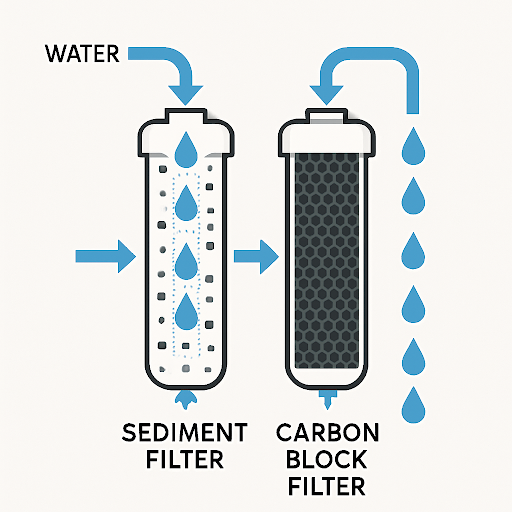
These filters are the frontline defense, designed to trap physical debris like rust, dirt, sand, and silt. By removing these larger particles, sediment filters protect the more sensitive, later stages of the filtration system from clogging and premature wear. This is a crucial step, as it ensures the longevity and efficiency of the entire Water Treatment system.
Step 2: Chemical and Taste/Odor Removal (Carbon Filtration)
The next step targets dissolved contaminants that affect the water's taste, smell, and chemical composition.
Activated Carbon Filters
Carbon filters are the workhorses of residential water treatment. They use a process called adsorption, where chemical contaminants stick to the vast surface area of the carbon. They are highly effective at removing:
- Chlorine and chloramines (used in municipal disinfection)
- Volatile Organic Compounds (VOCs)
- Pesticides and herbicides
- Other chemicals that cause bad taste and odor
Step 3: Specialized Treatment (Water Softening, RO, UV)

Once the water is free of large particles and most chemicals, it moves on to specialized treatment, which is tailored to the specific water quality issues of the home.
Water Softening
If the water is hard (high in calcium and magnesium), it will pass through a water softener, which uses ion exchange to remove these scale-causing minerals.
Reverse Osmosis (RO)
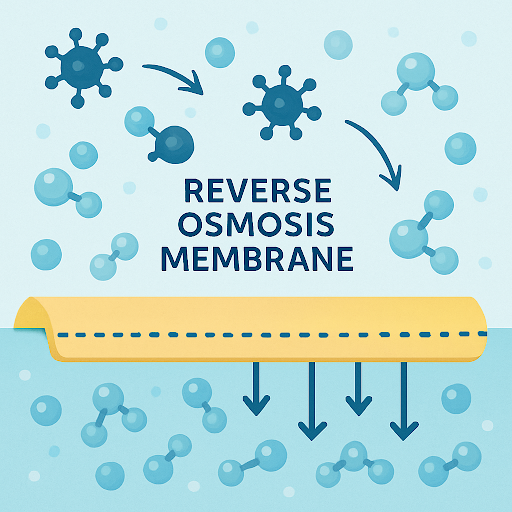
For the highest level of purification, often used for drinking water, the water is forced through a semi-permeable membrane. This membrane is so fine that it traps up to 99% of all dissolved solids, including heavy metals, fluoride, and total dissolved solids (TDS). This is the core of Reverse Osmosis (RO) Systems.
UV Sterilization
For homes on well water or those concerned about biological contaminants, the water is exposed to ultraviolet (UV) light. This light neutralizes bacteria, viruses, and other pathogens without the use of chemicals. This is the function of a UV System.
Step 4: Post-Filtration and Delivery
The final stage ensures the water is polished and ready for consumption.
Post-Carbon Filter
In multi-stage systems like RO, a final carbon filter is often used to "polish" the water, removing any lingering tastes or odors that may have been picked up during the storage or treatment process.
Experience The Royal Class Service Difference
Understanding the process of water treatment is the first step toward securing clean water. The next step is professional installation and maintenance.
At Royal Class Service, we don't offer one-size-fits-all solutions. We begin with a comprehensive water test to determine exactly what contaminants are present. We then design a custom Water Treatment system that utilizes the right combination of filtration, softening, and purification stages to deliver the purest water possible to your family.
Contact us today to schedule your water quality assessment and start your journey to truly clean water.