How Does Water Filtration Work? A Simple Guide for Homeowners
The water that reaches your home, whether from a municipal source or a private well, is rarely in its purest form. It often contains sediment, chlorine, heavy metals, and other contaminants that can affect its taste, odor, and safety. This is why water treatment is essential. The core of any effective treatment system is filtration. Understanding how water filtration works is the key to choosing the right system to protect your family and your plumbing.
The Two Primary Mechanisms of Water Filtration

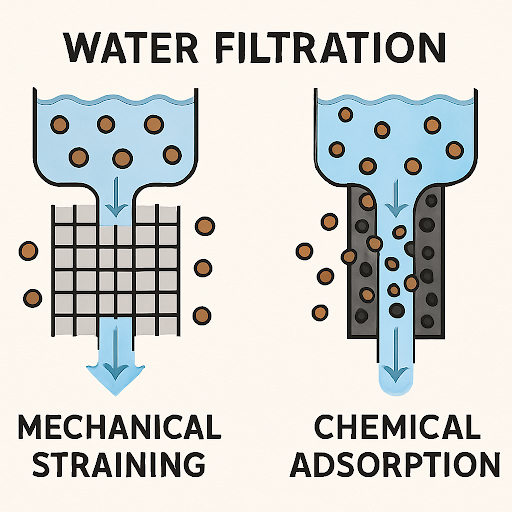
Water filtration systems employ two main physical and chemical processes to remove impurities: mechanical straining and chemical adsorption.
1. Mechanical Straining (Physical Filtration)
This is the simplest form of filtration, where a physical barrier is used to block particles larger than the pores in the filter media.
- Sediment Filters: These are typically made of pleated paper, spun fiber, or ceramic. They are rated by their micron size (e.g., 5 microns), which indicates the smallest particle they can trap. They are essential for removing rust, dirt, and sand.
- Reverse Osmosis (RO) Membranes: While more complex, the RO membrane acts as an ultra-fine physical filter. It has pores so small that only water molecules can pass through, effectively blocking up to 99% of dissolved solids, including salts and heavy metals. This is why Reverse Osmosis (RO) Systems are considered the gold standard for drinking water.
2. Chemical Adsorption (Carbon Filtration)
This process uses activated carbon to chemically bond with and remove contaminants.
- Activated Carbon: Carbon is treated to be extremely porous, creating a massive surface area. When water passes over the carbon, contaminants like chlorine, VOCs (Volatile Organic Compounds), and chemicals that cause bad taste and odor are attracted to and stick to the carbon surface. This process is called adsorption.
Different Types of Filtration Systems
Different filtration systems are designed to address specific water quality issues in your home.
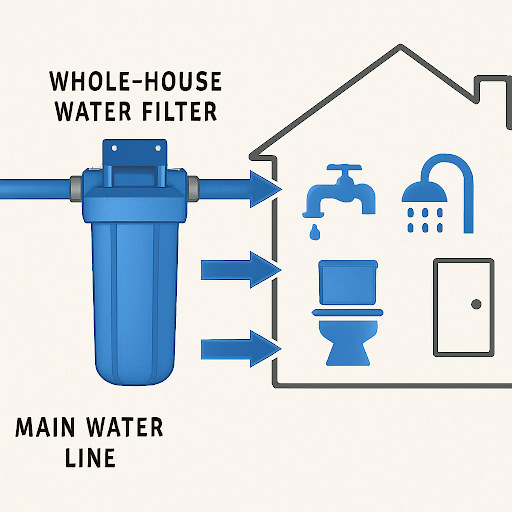
Point-of-Entry (Whole-House) Filtration
These systems are installed where the main water line enters your home. They treat all the water used for bathing, washing, and cooking. A whole-house filtration system typically includes a sediment filter and a large-capacity carbon filter to remove chlorine and protect your plumbing and appliances.
Point-of-Use Filtration
These systems treat water at a specific tap, such as a kitchen sink or refrigerator. RO systems are the most common type of point-of-use filter, providing ultra-pure water for drinking and cooking.
Other Water Treatment Systems
Filtration is often combined with other Water Treatment methods for comprehensive water quality control.
- Water Softeners: Water softeners do not filter water in the traditional sense. Instead, they use ion exchange to remove hard minerals (calcium and magnesium) that cause scale buildup.
- UV Systems: UV Systems use ultraviolet light to sterilize water, killing bacteria and viruses without adding chemicals. This is a purification method, not a filtration method, but it is often the final step in a comprehensive well-water treatment system.
Get the Right Filtration System with Royal Class Service
Understanding how water filtration works is the first step toward securing clean water. The next step is getting a professional water test to determine exactly what contaminants you need to filter out.
At
Royal Class Service, we specialize in designing and installing customized water treatment solutions. We will analyze your water and recommend the perfect combination of filtration, softening, and purification to ensure your family has access to the cleanest, best-tasting water possible.
Contact us today to schedule your water quality assessment and start enjoying the benefits of filtered water.