
How much does an HVAC compressor cost to replace? For most Hudson Valley homeowners, the answer falls between $800 and $2,800 installed, but that range changes significantly based on the type of refrigerant, the unit’s age, and the availability of parts. Royal Class Service has replaced compressors across Orange, Dutchess, Ulster, and Putnam counties. In this post, we break down exactly what drives that price range.
Here's what surprises most homeowners: the compressor itself isn't always the most expensive part of this job. In many cases, the labor, the refrigerant recharge, and the diagnostic work that confirms the compressor actually failed add up to more than the part. That's the math that makes this repair feel unpredictable, and why getting a straight answer upfront matters more than it sounds.
What Drives the Cost of Replacing an HVAC Compressor?
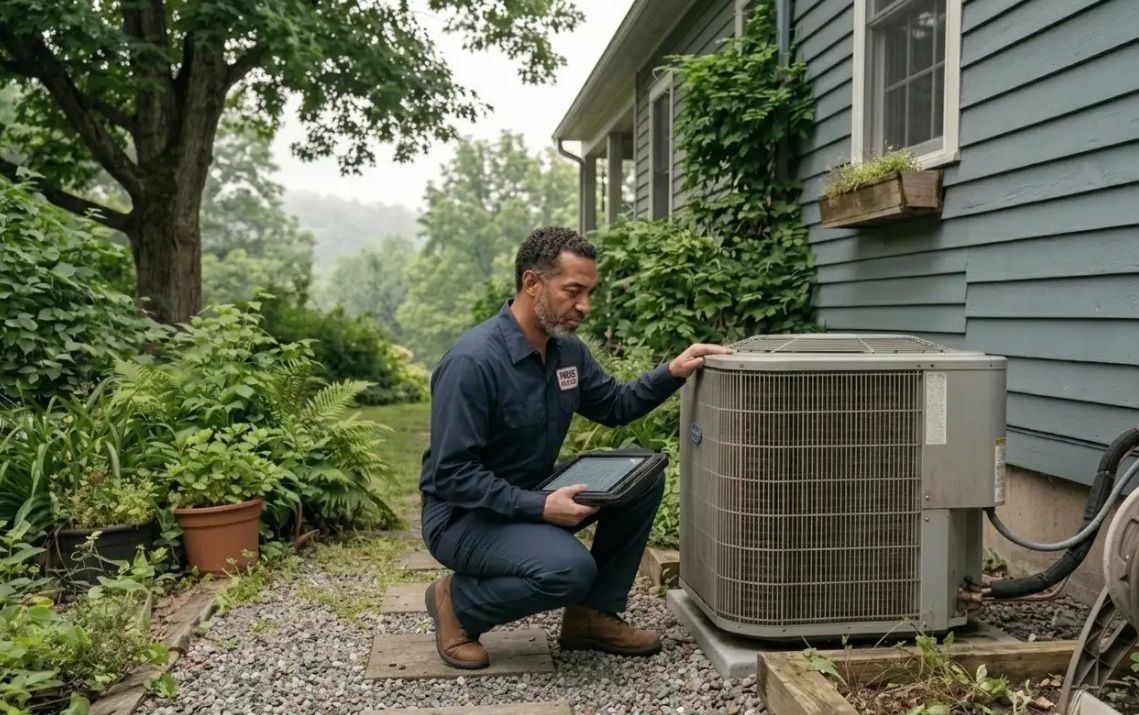
Several variables stack on top of each other to produce your final quote. Understanding them helps you read a proposal clearly rather than just accepting it.
The compressor itself typically runs $400 to $1,200 for most residential systems. Labor adds another $400 to $600 depending on how accessible the outdoor unit is and how long the job takes. If your system still uses R-22 or HCFC-22 refrigerant (the older, now-phased-out coolant), expect a significant premium. R-22 has become expensive and hard to source since the EPA completed its phase-out in 2020. Systems manufactured before 2010 are more likely to carry that cost.
These other factors push the number higher:
- Compressor brand and compatibility with your existing equipment
- Whether the refrigerant lines need flushing after a burnout failure
- System size (a larger tonnage unit requires a larger, more expensive compressor)
- Whether the outdoor unit requires additional electrical work
In the Hudson Valley, seasonal temperature swings also play a role in how quickly compressors wear out. Systems that cycle hard through hot Newburgh summers and then sit dormant through cold winters tend to show compressor wear earlier than in milder climates, particularly on units that didn't receive routine AC maintenance over the years. Refrigerant undercharge (too little coolant in the system) is one of the most common causes of early compressor failure, and it's preventable with annual checkups.
Repair vs. Replace: How Hudson Valley Homeowners Should Decide
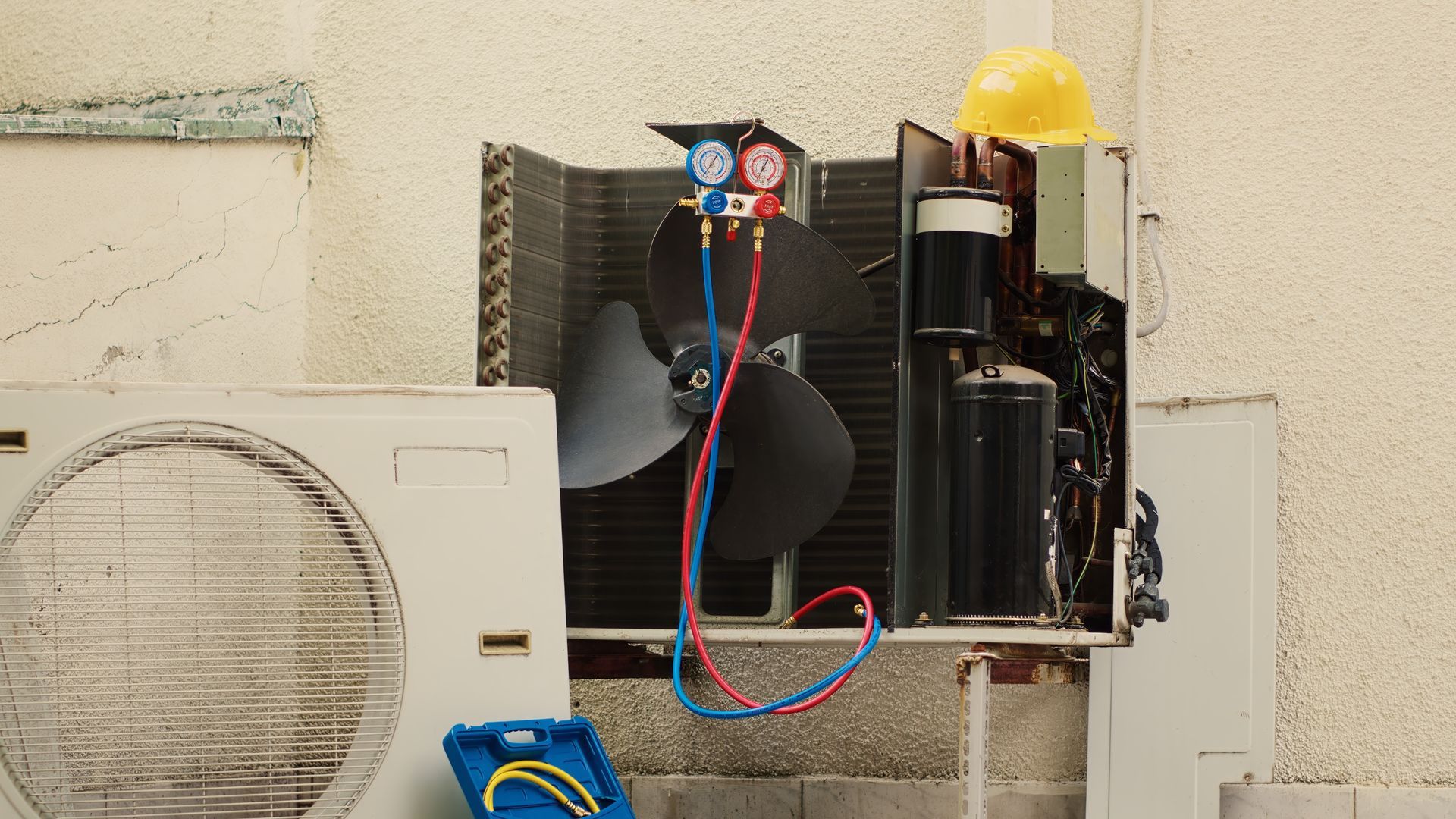
The compressor cost alone doesn't tell you whether the repair is worth doing. That's a decision based on your whole system, not just the part.
A widely used guideline in the HVAC industry is the 50% rule: if the repair cost exceeds 50% of what a new system would cost, replacement is usually the smarter investment. A mid-range central AC system for a Hudson Valley home can run roughly $4,000 to $7,500 or more installed, depending on its efficiency rating and brand.
So if you're looking at a $2,200 compressor replacement on a 12-year-old unit, that math often points toward a new system—especially once you factor in that other components (capacitors, contactors, fan motors) are aging at the same rate.
If you find yourself in these situations, AC repair makes more sense than a full replacement:
- The unit is less than 8 years old and otherwise in good condition
- The system uses R-410A refrigerant (still widely available and affordable)
- A single component failed without evidence of widespread wear
- Your current system is properly sized for your home
Orange County homeowners in homes built before 2000 often face a harder version of this decision. Older ductwork, outdated equipment sizing, and the potential for R-22 refrigerant all complicate the repair-or-replace dilemma in ways a quick quote over the phone can't capture. A proper in-home evaluation from an AC repair technician is the only way to get a number you can actually trust.
Frequently Asked Questions
How long does an AC compressor last?
Most residential AC compressors carry manufacturer ratings of 10 to 15 years under normal operating conditions. Units that run in regions with extreme summer heat or that missed regular maintenance tend to reach the lower end of that range. Refrigerant leaks and dirty coils are the two most common causes of premature failure, both of which are caught during routine seasonal service.
Is it worth replacing just the compressor, or should I replace the whole AC unit?
Replacing just the compressor makes sense when the unit is under 10 years old, uses the current refrigerant, and is otherwise in solid working condition. Royal Class Service evaluates the full system before recommending a compressor-only repair since replacing one aging component in a system where others are near failure often leads to a second expensive repair within a year or two.
Does homeowners insurance cover AC compressor replacement?
Homeowners insurance typically does not cover mechanical breakdown or wear-and-tear failures, which includes most compressor replacements. Some home warranty plans do cover compressors, though coverage limits and exclusions vary. If you're unsure what your policy covers, review your warranty documentation or call your provider before scheduling the repair.
Get an Honest Assessment Before You Spend a Dollar
Replacing an AC compressor is one of the more expensive single-component repairs a homeowner faces. Whether a repair or replacement is the right call depends on factors that vary house by house. The cost range is real, but so is the gap between a repair that buys you five more years and one that just delays the inevitable.
Royal Class Service has served Hudson Valley homeowners across Orange, Dutchess, Ulster, and Putnam counties since 1995. Upfront pricing is part of every job. If your system stopped cooling and you're not sure whether you're looking at a compressor issue or something else,
contact us and we'll send a technician to give you a straight answer before any work begins.
Recent Posts
Join the Royalty of Home Maintenance.
Get 15% off all repairs, priority scheduling, and two precision tune-ups a year.
Don't get caught off guard by hidden fees.
Use our Instant Estimator to get a clear price range in seconds.