How to Choose the Best Water Softener for Your Home

January 22, 2026

Share this article

If you live in an area plagued by hard water, you already know the frustrations: stubborn soap scum, dull laundry, dry skin, and appliances that wear out too quickly. A water softener is the ultimate solution, transforming your home's water quality and protecting your investments. This can also prevent issues that might require plumbing repair. But with a myriad of options available, the question quickly becomes: how to choose water softener that's perfectly suited for your home? This guide will walk you through the essential factors to consider, ensuring you make an informed decision.


Step 1: Understand Your Water Hardness and Usage

Before you begin evaluating models, the most crucial step is to understand your home's specific needs. This involves two key pieces of information: For comprehensive insights into your home's systems, consider checking your indoor air quality as well.


1. Water Hardness Level

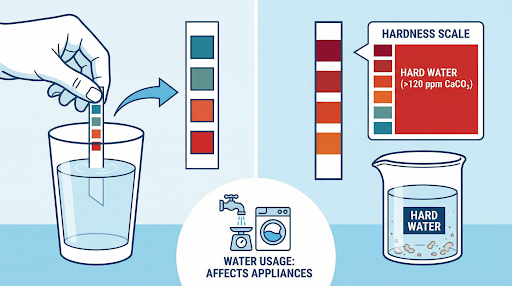
Water hardness is measured in grains per gallon (GPG) or parts per million (PPM). Understanding water treatment is crucial here. You can find this information through a professional water test, which is highly recommended, or by checking your local water utility report. Knowing your exact hardness level is fundamental to sizing your softener correctly.


2. Daily Water Usage

Estimate your household's daily water consumption. A common rule of thumb is 75 gallons per person per day. Multiply this by the number of people in your household to get an approximate daily usage figure.


Example:
A family of four using 75 gallons/person/day = 300 gallons/day.


Step 2: Calculate the Required Softener Capacity

Once you have your water hardness (GPG) and daily water usage (gallons), you can calculate the softener's required grain capacity. This determines how many hardness grains the softener can remove before regeneration is required.


Formula:
(Daily Water Usage in Gallons) x (Water Hardness in GPG) = Grains of Hardness to Remove Per Day


To determine the ideal capacity, multiply your daily grain removal by the number of days you want between regenerations (typically 3-7 days). For instance, if you need to remove 3,000 grains per day, a 30,000-grain softener would regenerate every 10 days, which is a good balance.


Step 3: Choose the Right Type of Water Softener

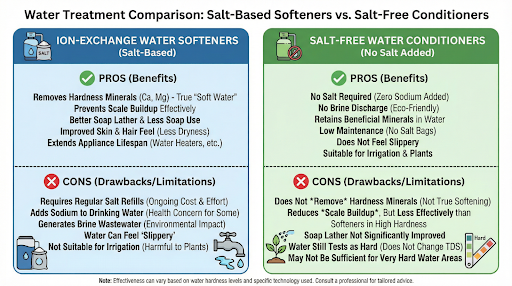
There are several types of water softeners, but the most common and effective for residential use are ion-exchange (salt-based) systems.


1. Ion-Exchange (Salt-Based) Softeners

These are the traditional and most proven methods for removing hard minerals. For more on the process of water treatment, see our detailed guide. They use resin beads to exchange hard mineral ions (calcium and magnesium) for soft sodium ions. They require salt to regenerate the resin.


  • Pros: Highly effective, reliable, proven technology.
  • Cons: Requires salt refills, produces a small amount of wastewater during regeneration.


2. Salt-Free Water Conditioners (Descalers)

These systems don't remove hard minerals; they modify their chemical structure to prevent them from adhering to surfaces. They are a type of water filtration system. They are not true softeners but can reduce scale buildup.


  • Pros: No salt required, no wastewater.
  • Cons: Does not remove hardness, less effective than ion-exchange softeners for severe hard water issues.


Step 4: Consider the Control Valve Type

The control valve is the brain of your water softener, dictating when and how it regenerates. There are two main types:


1. Timed (Metered) Regeneration

These softeners regenerate on a set schedule, regardless of how much water has been used. While simpler, they can be less efficient, regenerating when not needed or running out of soft water if usage exceeds expectations.


2. Demand-Initiated (On-Demand) Regeneration

These systems monitor your water usage and only regenerate when necessary, based on actual demand. This is the most efficient type, saving water and salt.


  • Pros: Highly efficient, saves salt and water, ensures you always have soft water.
  • Cons: Typically, a higher upfront cost.


Step 5: Look for Quality and Features
  • Brand Reputation: Choose reputable brands known for durability and customer support.
  • Warranty: A strong warranty for the tank and control valve indicates the manufacturer's confidence.
  • Bypass Valve: Essential for easy maintenance and repairs without shutting off your home's main water supply.
  • Flow Rate: Ensure the softener's flow rate meets your household's peak demand without causing a significant drop in water pressure.
  • Certifications: Look for certifications from organizations such as NSF International or the Water Quality Association (WQA), which verify that products meet strict performance standards.


Parting Thoughts

Choosing a water softener requires a careful assessment of your water quality, household needs, and the features that matter most to you. By following these steps, you can select a Softeners system that provides years of reliable soft water, protecting your home and enhancing your daily life. For personalized advice and professional installation, trust Royal Class Service to guide you through the process and ensure your water treatment solution is perfect for your home.


Ready to enjoy the benefits of soft water? Let us help you choose the best water softener!
Contact Royal Class Service today for a personalized consultation!

Recent Posts

January 26, 2026
Master how to set the water softener correctly. Learn about hardness settings, regeneration cycles, and salt dosage to ensure consistent soft water.
January 19, 2026
Learn how long should a water softener last and the key factors that influence its lifespan. Discover the warning signs that your system needs replacement.
January 16, 2026
Wondering how much are reverse osmosis systems? Get a full breakdown of unit costs, installation fees, and long-term maintenance for home RO units.
January 13, 2026
Explore the top benefits of RO water, from superior purity and improved taste to cost savings and appliance protection. Upgrade your water quality today.
January 7, 2026
Are reverse osmosis systems safe for your family? We address common concerns about minerals, pH levels, and contaminant removal in RO water systems.
January 5, 2026
Discover how does reverse osmosis work to purify your home's water. Learn about the RO process, membrane technology, and the benefits of clean drinking water.
December 31, 2025
Discover what is the best water softener for your home by understanding sizing, regeneration types, and the importance of professional installation.
December 26, 2025
Learn the science behind how a water softener works using ion exchange to remove hard minerals and protect your home's plumbing and appliances.
December 23, 2025
Find out what are the best home water filtration systems for your needs, including whole-house and RO options, based on expert analysis and water testing.
December 19, 2025
Discover how does water filtration work using carbon and reverse osmosis to remove contaminants and provide your home with pure, great-tasting water.
Show More